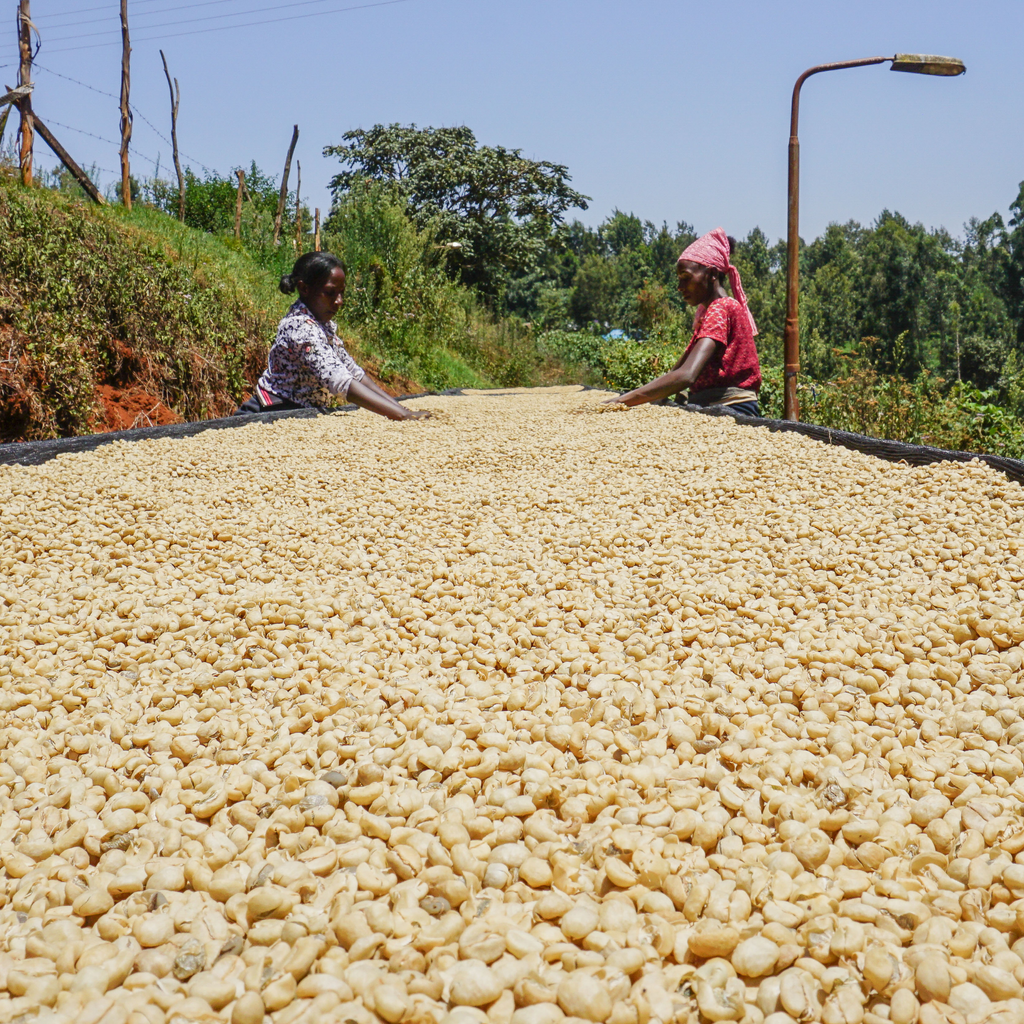
Coffee processing is far more than a necessary step after harvesting. It defines the sensory profile of the bean, modulates sweetness, acidity and body, and deliberately opens up possibilities for experimentation.
Coffee blog
-
January 16, 2026
-
January 02, 2026
Sensory analysis in coffee: Cupping, basic flavors and the Kebado from Ethiopia
Coffee sensory analysis, cupping, and the analysis of basic flavors are key tools in coffee tasting and evaluation. They make it possible to consciously experience and understand the complex aromas of coffees like Kebado from Ethiopia.
-
December 08, 2025
From Heirloom to Yirgacheffe: Chelchele Omniroast from Ethiopia
Our Chelchele cherries from Yirgacheffe grow at an altitude of 1,800–1,920 m in the Gedeb area, on deep, red clay soils, supplied with pure spring water and plenty of rain – ideal conditions for the traditional heirloom varieties.
-
November 01, 2025
Always harvest time: This is how the world supplies us with fresh coffee all year round.
How can fresh coffee be available year-round, even though a coffee plant needs a year to ripen? The answer lies in global harvest cycles. We show how harvest times stretch around the globe from Brazil to Colombia to Kenya, and what fly crops have to do with it.
-
September 19, 2025
Coffee Week Berlin 2025 at Kaffeekirsche Roastery - September 22nd to 27th, 2025
Coffee Week Berlin 2025 is just around the corner – and we've prepared an exciting program for you. From September 22nd to 25th, we'll open our doors for a series of events where you can experience coffee up close. Together with our partners, we'll show you new facets of the coffee world – from cuppings and barista tips to a quiz night with an all-you-can-drink espresso martini.
-
September 01, 2025
Our coffee of the month in September: Mutitu AA from Kenya
On the southern slopes of Mount Kenya, in the Kirinyaga region, lies the Mutitu Washing Station – founded in 1963, in the midst of a period of change when, after independence, Kenya began to place its agricultural economy more in the hands of local producers.